
Borssele wind farm zone
Particulars of the wind farm
The Borssele wind farm zone, off the coast of Zeeland, is the first zone that was developed with the aim of generating more renewable energy. The wind farm zone is made up of two wind farms, both with two sites, and an ‘innovation site’. When conditions are clear, the wind farm can be seen from Westkapelle. The electricity is brought to land near Borssele by transmission cables and, from there, distributed to the national high voltage network.
| Location | Off the coast of Zeeland |
|---|---|
| In use from | 2021 |
|
In use untill |
2046 |
|
Number of wind turbines |
173 |
|
Turbine output (MW) |
8 - 9,5 MW |
|
Wind farm output |
1502 MW |
|
Surface area (km2) |
344 km2 |
|
Operators |
|
|
Tennet platforms |
2 |
Sites
The permits for the sites that make up the Borssele wind farm zone were issued to:
You can find all reports and decisions on the website of RVO Bureau energieprojecten.
Here, you will find documents such as:
- the Range and Detail Memorandum (NRD);
- the Environmental Impact Report;
- the site decisions.
Free passage
The Borssele wind farm zone is closed to through shipping through the wind farms; shipping may pass solely through the corridor. Vessels with a length of up to 45 metres can use the corridor.
The 'Code of conduct for safe passage through the Borssele Wind Farm Pass' (pdf, 250 kB) covers the rules and safety tips for shipping passing through the Borssele wind farm zone.
Shared use
Working from the position that space needs to be used in multiple ways, the North Sea 2016-2021 Policy Memorandum set out the decision to open up the wind farms for shared use in addition to shipping. The following types of shared use are possible in the Borssele wind energy zones:
- Nature restoration and development (examples being oyster restoration, fish refuges and artificial reefs)
- Renewable energy production and storage (such as solar, wave and tidal energy, and hydrogen production plants)
- Passive fishing (pots for crabs and lobsters, handlining and gillnets)
- Marine aquaculture (shellfish and seaweed cultivation)
A new version of the Borssele Area Passport Guide was drafted in 2026 for the Borssele wind energy zone. An Area Passport Guide works as a spatial planning instrument for each wind energy area, stating – on the basis of area-specific characteristics – where and which forms of shared use are most promising and best in terms of integration, and therefore the preferred options. A zoning map in the Area Passport Guide indicates where space is available for shared use in a wind energy zone.
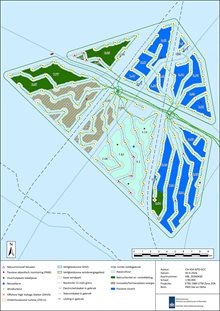
Larger picture Borssele Windfarm Zone
Legend Borssele wind farm zone:
- Natuurinclusief bouwen = Nature-inclusive construction (Δ violet)
- Passieve akoestisch monitoring = Passive acoustic monitoring (red)
- Visschuilplaats kabeljauw = Cod fish shelter (green)
- Mosselfarm = Mussel farm (blue)
- Offshore High Voltage Station (red cross)
- Onderhoudszone turbine = Turbine maintenance zone
Free space for shared use
- Aquacultuur = Marine aquaculture (turquoise)
- Natuurherstel en -ontwikkeling = Nature restoration and development
(green) - Innovatie/hernieuwbare energie = Innovation/generation of renewable energy (grey-yellow)
- Passieve visserij = Passive fishing (blue)
A permit must be acquired under the terms of the Environment Act before starting any shared use activity.
See also the short version of the application procedure for shared use: Aanvraagprocedure van een vergunning voor medegebruik.
The Area Passport guide for the Borssele wind farm zone can be found here: Borssele Area Passport Guide .
See also the Administrative Ruling of General Application (B.A.S.) establishing safety zones for the Borssele wind farm zone, which is published in the Government Gazette.
Nature development in site II
In site II, Ørsted is testing a new concept to further support biodiversity in the Dutch section of the North Sea. The installation of artificial reefs provides refuges and feeding grounds for Atlantic cod and other large fish species. The reefs consist of large concrete pipes installed in a circular pattern on the seabed. Cavities and refuges are created in these new reef formations, which are known as ‘cod pipe reefs’. The cod can seek refuge here and feed on, for example, smaller fish and crabs. The cod pipe reefs were designed in close collaboration with researchers from Wageningen Marine Research. They will also be studying the ecological impacts of the project over the next few years with support from The Rich North Sea programme (programme Rijke Noordzee). This research is contributing to the development of knowledge and experience for nature development projects in the North Sea wind farms. The project received a permit in 2019 for the same length of time as the wind farm.
Mussel farm in site III
According to the Area Passport, site III is reserved for marine aquaculture. At the beginning of 2022, a permit was granted for the construction and use of a mussel farm in this site. This pilot project is the first form of shared use in a wind energy area in the Dutch North Sea. You will find more information on the website of O.O.S. International.
Borssele
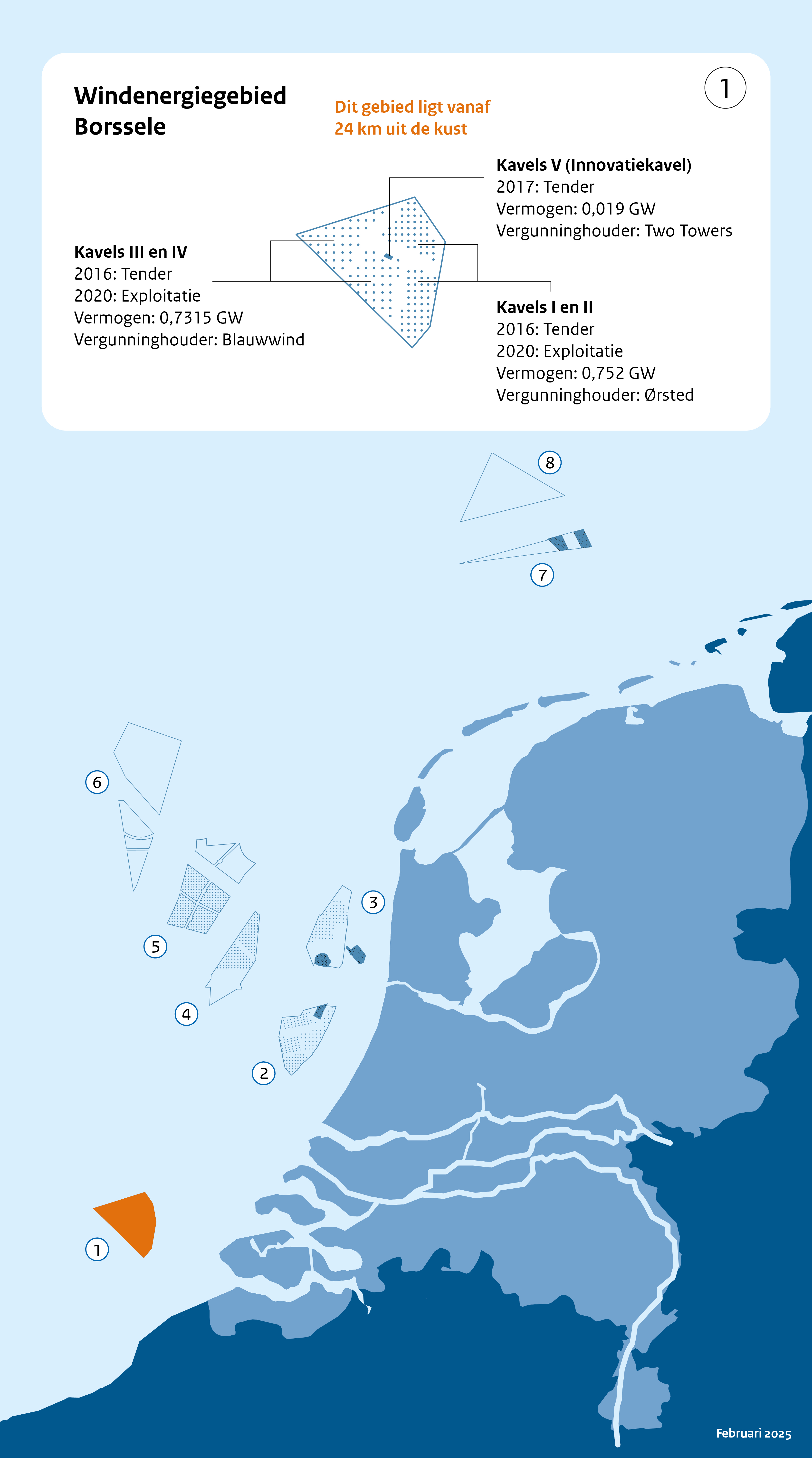
Legend Borssele wind farm zone:
- Kavel = Site
- Vermogen = Output
- Exploitatie = Operation
- Vergunninghouder = Permit holder
- Dit gebied ligt vanaf 24 km uit de kust = This zone lies from 24 km off the coastline
- Bestaande windparken = Existing wind farms
- Toekomstige windparken = Future wind farms